How to tie a tie?
Did you know that there are different ways to tie your tie? Often the type of knot you want depends on the characteristics of your shirt collar. Première Manche tells you more about these different types of knots, but also guides you to make them easy and simple!
Know that there are different types of knots that depend on the tie, the collar of your shirt and the style you want to adopt! Here, we present five knots: the simple knot, the Windsor knot, the cross knot, the large knot and the small knot.
The tie is an essential accessory for your outfit. Moreover, you can play with originality with patterned ties or with vibrant colors to add extravagant touches to your suits.
-
The Simple Knot
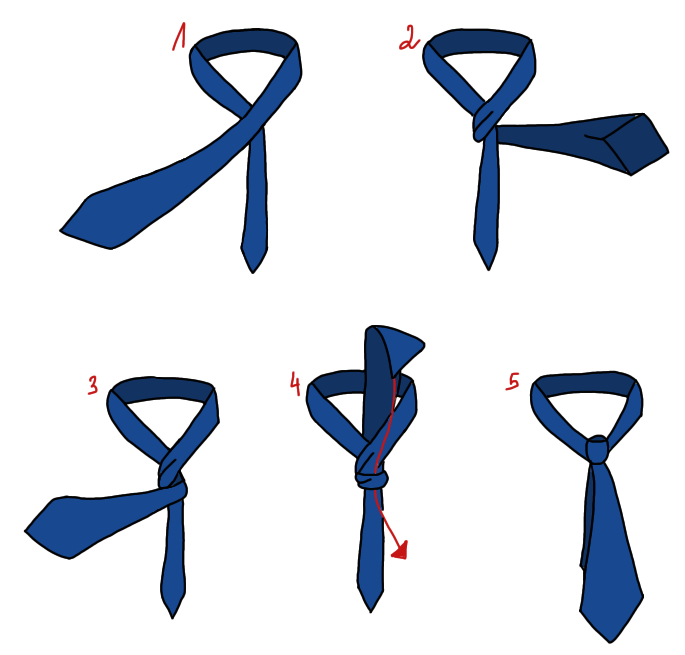
The single knot is the classic knot par excellence! It's the most commonly used knot because it's easy to tie and goes with most shirts.
Plus, it will help you style your neck thanks to its asymmetry and its rather elongated effect.
Here are some visuals to help you make this knot:
-
The Windsor knot
Typically English, this knot is perfectly adapted for open collars or thin ties. If you have a long neck, this type of knot gives the illusion of a shorter neck.
Five steps to help you tie this knot:


-
The cross knot
This is one of the most difficult knots to make, yet it can be worn with any type of tie. Here are some instructions to help you do it!

-
The wide knot
As its name indicates, this knot will go very well with wide shirt collars. If you are good at tying the Windsor knot, tying the wide knot will be a breeze!

-
The small bow
Unlike the other bows, this one has a more casual and comfortable look. Although, of course, it remains an elegant and modern style. Choose this type of knot if you wear shirts with very tight collars and for ties made of thick fabric.
Here's how to tie the small knot:

You now know that there are different types of tie knots and that it will depend on several factors: the type of your tie, the collar of your shirt, but also the style you want to give to your outfit: rather casual or chic.
Tying a tie is not easy and requires several practice sessions to do it perfectly! Take some time and be patient. By the way, you can practice with our ties which are available in different colors and fabrics.
Now you can also ask yourself how to choose your tie according to various occasions, patterns and your morphology, the answers to your questions in this article!